
Introduction
In recent years, rising demand for plant-based diets and sustainable food sources has driven researchers to explore novel meat analogues derived from plant materials. Among these, banana blossom — the inflorescence or “flower” of banana plants — has drawn attention. Its fibrous structure, mild flavor, and nutritional attributes make it a promising candidate to mimic the texture and mouthfeel of meat or seafood. This article examines the scientific and practical evidence around using banana blossom as a “meat analogue,” with particular emphasis on its texture properties, sensory acceptability, nutritional potential, and challenges.
Why Banana Blossom? Nutritional and Structural Features
Banana blossom has traditionally been used in Asian cuisines as a vegetable, but modern food-science research highlights reasons for its potential as meat alternative:
- High fiber and favorable nutrient profile. Banana blossom contains substantial dietary fiber, along with minerals such as potassium, magnesium, iron, and antioxidants.
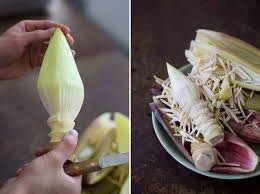
- Fibrous, flaky structure. The internal anatomy of banana blossom — layers of fibrous tissue — can be harnessed to mimic the “shredded,” flaky or fibrous texture often sought in meat analogues or fish substitutes.
- Up-cycling agricultural by-product. Since banana blossoms are often discarded in banana harvesting, using them for food reduces waste, aligning with sustainability and circular-economy goals.
Thus, banana blossom presents a resource-efficient, plant-based raw material with intrinsic structural features conducive to meat-like texture.
Empirical Studies: Texture and Sensory Acceptability
Several experimental studies have attempted to convert banana blossom into meat analogue products — nuggets, meatballs, jerky, and even pâtés — evaluating their physicochemical properties, texture, and consumer acceptance.
Banana Blossom Nuggets
One investigation prepared “banana blossom nuggets” with varying proportions of banana blossom and potato flour. Across formulations, the study measured hardness, chewiness, oil absorption, protein and fat content, and conducted sensory (hedonic) testing.
- Nuggets with a 65:25 banana-blossom:potato-flour ratio had more favorable consumer acceptance (color, aroma, flavor) than those with lower or higher banana blossom content.
- However, the formulation with higher banana blossom content tended to have higher hardness; one version (50:40) saw increased hardness compared to formulations with lower banana blossom ratio.
- In terms of sensory texture (mouthfeel), there was no significant difference reported between different formulations — meaning that consumers tolerated or accepted the texture across compositions, even when objective measures of hardness varied.
Thus, for a “fried” or processed product like nuggets, banana blossom — with supportive binding/flour base — can produce a reasonably acceptable texture and sensory profile.
Banana Blossom + Legume/Protein Binder Meatballs
A more “meat-like” analogue was explored by combining minced banana blossom (from the Kepok banana variety) with brown-lentil paste and high-protein binders (such as wheat gluten, isolated soy protein), to produce plant-based “meatballs.”
- Researchers tested multiple ratios (100:0 to 30:70 banana-blossom: lentil paste); the optimal for protein content and cooking yield was 40:60.
- With a particular binder formulation (containing wheat gluten + soy protein), the resulting meatballs showed high water-holding capacity, acceptable total dietary fiber, and a texture profile comparable to conventional meatballs — hardness ~ 516 g, chewiness ~ 353 N·mm, springiness ~ 0.87 mm.
- Sensory evaluation indicated that the version with that binder formulation scored closest to a reference (commercial/animal-derived) meatball in terms of overall acceptability.
This suggests that banana blossom, though low in protein itself, can contribute meat-type texture when combined with legume protein and functional binders.
Meatless Floss (Shredded “Meat”) from Banana Blossom
In a study aiming to produce a “meatless floss” — akin to shredded, fibrous meat floss — banana blossom was used (sometimes together with young jackfruit). One optimized formulation was 100% banana blossom (i.e., no jackfruit).
- Texture analysis (specifically firmness) indicated that 100% banana-blossom floss had acceptable firmness, with error below 10% — showing banana blossom alone could generate a stable fibrous structure resembling shredded meat.
- Sensory evaluation (affective test) found that panelists were unable to significantly distinguish between different floss samples (jackfruit + banana blossom blends), implying that pure banana blossom floss was comparable in attractiveness/acceptability to blends.
This demonstrates banana blossom’s capacity, under appropriate processing, to approximate the “stringy/shredded” texture typical of meat-floss products.
Banana Blossom Jerky with Protein Supplementation
Because banana blossom’s protein content is modest, researchers have supplemented it with protein-rich materials (e.g., tofu dregs) to improve nutritional properties in a jerky product.
- In that study, adding 40 g tofu dregs to the banana blossom jerky increased protein content to 3.92% and improved texture and taste according to sensory panel (hedonic) results.
- The overall acceptance — in terms of color, aroma, taste, and texture — was “like” on average, indicating reasonable consumer acceptability.
Thus, with intelligent formulation, banana blossom-based analogues can be acceptable even for dried or chewy products like jerky.
Pâté and Other Innovations
More recently, a 2025 study demonstrated the feasibility of using banana inflorescence (closely related to banana blossom) to develop plant-based pâté products.
- The banana-inflorescence pâtés had low fat (≈ 0.7 g/100 g), modest protein (≈ 0.8 g/100 g), ash (1.2 g/100 g), and dietary fiber reasonably high (≈ 3.3 g/100 g).
- Sensory acceptability was reported to be good, suggesting that banana blossom or related inflorescence could be textured into soft, spreadable analogues — broadening the horizon beyond just nuggets, meatballs or jerky.
This underscores banana blossom’s versatility across a range of formats — from shredded floss to meatballs, nuggets, jerky, and even pâté.
Underlying Mechanisms: Texture Generation and Challenges
Why does banana blossom work — and sometimes not — as a meat analogue? Several factors come into play:
- Fiber and structural matrix: The fibrous, layered structure of banana blossom provides a “scaffold” that can mimic the connective tissue/meat fiber network, especially when shredded or minced. This helps achieve a “stringy,” flaky, or chewy mouthfeel that many analogues aim for.
- Need for binders or complementary proteins: Because banana blossom is low in protein (or at least not a “meat-equivalent” protein), achieving a texture that holds together — especially in cohesive forms like meatballs or burgers — often requires the addition of other protein sources (e.g., soy protein, wheat gluten, tofu dregs) or flours (e.g., potato flour) to provide binding, structural integrity, and nutritional balance.
- Processing methods matter: The way banana blossoms are pretreated, shredded, minced, combined with other ingredients, cooked, and processed (fried, baked, dried) has a major influence on final texture. For example, making nuggets with potato flour gives different hardness and chewiness than meatballs made with gluten + lentils + banana blossom.
- Sensory tradeoffs: flavor, moisture, stability: Banana blossom’s mild flavor may be advantageous (neutral) — but needs seasoning. Its high fiber and water absorption may affect moisture, cooking yield, oil retention or dryness (e.g., in jerky). Balancing between fibrousness (texture) and palatability is non-trivial.
Limitations and Considerations
While promising, banana blossom-based meat analogues come with some caveats and constraints:
- Low intrinsic protein content: As many researchers noted, banana blossom alone often lacks sufficient protein, so supplementation (with legumes, gluten, tofu, etc.) is commonly required for nutritional quality and texture binding.
- Potential off-flavors or vegetal taste: Some formulations — particularly those with high proportion of banana blossom — may develop more vegetal or “planty” flavor, which may not satisfy consumers expecting meat-like taste. For instance, in a jerky formulation with banana blossom + tofu dregs, while texture was “liked,” flavor acceptance was more modest.
- Variability due to banana variety and processing: Different banana cultivars (e.g., Kepok banana blossom vs others), as well as preprocessing (washing, peeling, removing sap, blanching, acidulated soaking to prevent browning) can influence texture, fiber content, color, and sensory characteristics.
- Not a full meat-protein replacement: Even when supplemented, banana-blossom-based analogues may not match the complete amino acid profile, digestibility, or nutritional completeness of animal meat — meaning they may better serve as “meat-like texture” foods than full meat substitutes. As some reviews suggest, more comprehensive nutritional profiling (including amino-acid composition) is still needed for many banana-flower based foods.
Broader Implications: Sustainability, Food Security, and Innovation
The exploration of banana blossom for meat analogues reflects broader trends and opportunities:
- Sustainable food sourcing and waste reduction: Using banana blossoms — often discarded — leverages an underutilized resource in banana agriculture, reducing waste while generating value-added food products.
- Support for plant-based diets and dietary diversity: For populations transitioning away from high meat consumption, banana blossom analogues offer an alternative that yields fiber, minerals, and antioxidants — useful especially where access to conventional meat is limited or expensive.
- Flexibility across product formats: The fact that banana blossom has been successfully used to create nuggets, meatless floss, meatballs, jerky, and even pâté suggests it is a versatile ingredient for food innovation, including vegan/vegetarian markets or hybrid meat-free options.
- Potential for local/regional food solutions: In banana-growing regions (such as parts of South and Southeast Asia), banana blossom analogues might offer locally-sourced, affordable meat alternatives — contributing to food security, nutritional diversification, and local food industry development.
Case Study: What Research Shows
Let us consider a few concrete findings to illustrate strengths and limitations:
- In the 2023 “meatless floss” study, researchers found that a 100% banana blossom formulation produced floss whose firmness (texture metric) was within acceptable range (error under 10%) and, in sensory evaluation, was statistically indistinguishable from other formulations with jackfruit. This demonstrates the feasibility of fully banana-blossom-based shredded products.
- In the plant-based meatball study using banana blossom + lentil paste + wheat gluten/soy-protein binders, the optimal ratio produced meatballs with relatively high cooking yield (>100%), acceptable texture (hardness, chewiness, springiness), and positive sensory scores — indicating that banana blossom can contribute to meat-like texture when properly formulated.
- For nuggets, a banana blossom–potato-flour formulation with 65% banana blossom delivered favorable sensory acceptability (color, aroma, flavor) and acceptable texture (though hardness increased with certain formulations).
- On the other hand, the jerky study with banana blossom plus tofu dregs achieved only modest protein content (about 3.9%) but still produced acceptable texture and sensory acceptance; however, these values remain lower than conventional animal-protein-based jerky.
These examples highlight that while banana blossom cannot completely mimic meat nutritionally on its own, it can successfully replicate many of the desirable texture characteristics associated with meat or shredded meat products — especially when complemented by other plant proteins or binders.
Conclusion & Future Directions
The body of research on banana blossom as a meat analogue reveals compelling promise — particularly in terms of texture and sensory acceptability. Its fibrous structure, high fiber content, mild flavor, and sustainability credentials position it as an attractive raw material for plant-based analogues: meatballs, nuggets, floss, jerky, and even pâté. With appropriate formulation (e.g., binders, supplemental proteins), banana-blossom-based products can approximate the mouthfeel, chewiness, and “shredded” texture of meat-based foods.
However, challenges remain. Banana blossom’s low intrinsic protein and variable nutritional profile necessitate supplementation if the goal is to approximate meat not only in texture but in nutritional value. There is also a need for standardized processing methods (peeling, blanching, binding, cooking) to ensure consistent texture, flavor, and safety. Moreover, more research is needed on digestibility, amino acid completeness, shelf-life, and consumer acceptance in diverse cultural contexts.
For future work, researchers and food technologists may focus on:
- Optimizing combinations of banana blossom with different plant proteins (legumes, pulses, gluten) to maximize both texture and nutrition.
- Investigating processing techniques (mechanical, chemical, enzymatic) to enhance fibrous structure, remove off-flavors, and improve shelf-life.
- Developing a broader range of product formats — burgers, sausages, patties, vegan “fish,” ready-to-eat snacks — to test acceptability across markets.
- Conducting nutritional and toxicological evaluations to ensure safety, digestibility, and nutritional adequacy — especially for populations relying heavily on plant-based diets.
- Exploring sustainability, supply-chain, and economic aspects of scaling banana-blossom-based analogues in banana-producing regions.
In summary: banana blossom stands out as a highly promising plant-derived meat analogue material, particularly for applications where texture — fibrousness, chewiness, “shredded” mouthfeel — is a priority. While it does not fully replace meat nutritionally on its own, combined with appropriate binders and proteins, it offers a viable, sustainable pathway toward diversified, meat-free (or meat-reduced) diets.
