
Introduction
In the past few years, many institutions worldwide have turned to digital systems to track, monitor, and respond to the COVID‑19 pandemic. Among these was the Philippine National Police (PNP), which used a specialized portal known as PNP CODA to manage COVID‑19 data for its personnel. Over time, “PNP CODA” has become associated with that data‑management portal, but conflicting online sources sometimes describe a very different “PNP CODA” — a supposed network‑automation tool. This article explores the history, functionalities, controversies, and legacy of PNP CODA, clarifying what it actually was (or was claimed to be), and why information about it can be confusing.
What is PNP CODA?
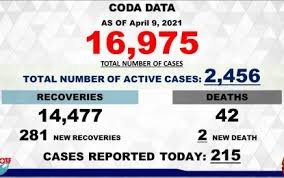
“PNP CODA” is most widely described as the COVID‑19 data portal for the Philippine National Police. According to multiple sources, it stands for “Philippine National Police COVID‑19 Data Acquisition” (or similar).
The portal was created during the global COVID‑19 pandemic to serve as a centralized system where the PNP could track health data, monitor vaccination status, contact tracing, and other pandemic-related information among its personnel.
Thus, PNP CODA was not a public health portal for all citizens — but a specialized tool used within the PNP organization.
Why PNP CODA Was Developed
The motivation for establishing PNP CODA stems from the urgent need to manage COVID‑19’s impact on the police force — a critical organization during the crisis. As many police officers continued working on frontline duties, they remained at risk of infection, exposure, and required vaccination or testing. A centralized system helped coordinate responses, track cases, and enforce health protocols among the roughly 26,000 personnel reportedly under PNP CODA.
Moreover, using a specialized database simplified contact tracing and monitoring: once a case was confirmed, the portal allowed administrators to log related contacts, assess exposures, and follow up on quarantines or test results.
In short: PNP CODA was a practical solution to the logistical challenge of keeping a large, mobile workforce safe during a pandemic, enabling the PNP to better manage health data and respond to outbreaks.
What PNP CODA Offered — Features and Functionality
Several key features and properties defined the PNP CODA portal, as described by public documents and informational websites:
- Centralized Data Repository — A single system where COVID‑19 related data (cases, test results, vaccination status, contact tracing logs) of PNP personnel could be stored and accessed.
- Contact Tracing Module — The system allowed unit administrators to record and track close contacts of confirmed cases, which was especially important when variants with high transmissibility emerged.
- Daily Self-Assessment & Monitoring — As part of health surveillance, PNP CODA reportedly was tied to self‑assessment routines, helping to catch early symptoms and enforce preventive measures.
- Vaccination Tracking — It stored vaccination information of police personnel, consolidating who had been vaccinated and who had not, making it easier to prioritize immunization efforts within the force.
- Secure Access (Internal Use) — The portal was restricted to PNP personnel and authorized users, not a public portal for ordinary citizens.
Thanks to these features, PNP CODA aimed to improve the speed and reliability of pandemic‑related interventions (testing, isolation, vaccination) among police personnel, which in turn helped reduce risk of outbreaks within essential security services.
Controversies and Confusion: Mistaken Identity of PNP CODA
Despite the clearer picture of PNP CODA as a COVID‑19 data portal, a surprising number of sources describe “PNP CODA” as a network‑automation tool — a kind of “plug-and-play” system for configuring network devices (routers, switches, access points, firewalls) — often purportedly developed by or associated with Cisco Systems, Inc..
According to those descriptions:
- PNP CODA stands for “Plug‑and‑Play Configuration of Data Assistant” (or variants of that) in the network context.
- The tool offers “zero‑touch provisioning,” device discovery, automated configuration, centralized management, and support for various network devices.
- It allegedly simplifies deployment of network devices and reduces manual configuration errors, making it appealing for enterprise networks.
However — and this is critical — there is no credible, verifiable evidence that such a “network‑automation version of PNP CODA” is in fact a real, official, widely recognized product. The network‑automation “PNP CODA” appears only on a handful of websites that otherwise lack authoritative backing. Several publicly known documents and formal references regarding COVID‑19 pandemic management for the PNP do not mention any network automation tool.
Moreover, the more reliable and better documented interpretation — PNP CODA as the police COVID‑19 data portal — aligns with official memoranda, health monitoring directives, and internal orders for contact tracing among PNP units.
Therefore, it seems the “network‑automation” PNP CODA is likely the result of misinformation, confusion, or conflation — possibly mixing up the acronym “PNP” with the generic computing term “PnP” (Plug and Play), or conflating network‑configuration tools with COVID‑data tools.
Real‑World Use: How PNP CODA Was Used by the Philippine National Police
To understand how PNP CODA operated in reality, it helps to examine how it was referenced in internal memos and official directives.
- A memorandum issued in August 2021 demanded that all units update their contact tracing monitoring within PNP CODA, noting that the portal was the “central repository” for COVID‑19 data, replacing the old weekly manual reporting system.
- That memo highlighted that some units had failed to update their logs, and warned that some COVID‑positive personnel reportedly had no declared close contacts — which was unrealistic given their front‑line duties.
- The contact tracing feature and daily online self‑assessment (launched June 21, 2021) were key components designed to capture data quickly and centrally, so that the PNP could act swiftly in case of outbreaks.
- The platform also helped monitor vaccination status among PNP personnel, an essential task especially when variants with high transmissibility emerged and mass immunization campaigns rolled out.
In essence: for the PNP, PNP CODA was a critical administrative and health‑management tool, intended to protect its workforce and ensure continuity of law‑enforcement operations during a major public‑health crisis.
Legacy, Relevance, and What We Learn
With the pandemic tapering off and vaccination widespread, one might wonder: what is the legacy of PNP CODA?
- Institutional Preparedness: PNP CODA illustrates how large organizations (especially those with critical public‑safety roles) can benefit from centralized health‑data systems. Having a dedicated portal for staff health and contact tracing helps manage risk efficiently, especially when human lives and essential operations are at stake.
- Digital Record‑Keeping Practice: The adoption of such a portal reflects a shift from manual, paper‑based health data tracking (or ad-hoc spreadsheets) to something more reliable, auditable, and quickly accessible. That kind of digital record‑keeping could be useful beyond COVID — for flu seasons, new pandemics, or other health emergencies.
- Transparency & Accountability (Internal): With PNP CODA, unit administrators and leadership can more easily monitor compliance: Who got vaccinated, who was tested, who failed to update contact tracing logs. That enables better oversight and response, reducing chances of unreported exposures that can compromise entire departments.
- Lessons in Communication: The confusion between the “COVID‑data PNP CODA” and the alleged “network‑automation PNP CODA” highlights how acronyms and naming overlaps — plus unverified online claims — can lead to misinformation. It serves as a reminder to cross‑check sources and rely on credible documentation before accepting technical claims.
Why There Is So Much Confusion
The contradictory descriptions of PNP CODA stem from several factors:
- Acronym Collision: The letters “PNP” coincide with both “Philippine National Police” and the generic computing term “Plug and Play (PnP).” Some writers may have assumed “PNP CODA” refers to a Plug-and-Play tool, leading to the network‑automation narrative.
- Poor Source Verification: Many websites that discuss “PNP CODA as a network tool” do not cite official documentation; they appear to copy from one another, perpetuating unverified claims.
- Language & Regional Variation: Since PNP CODA was used in the Philippines, and much of the documentation exists in local or internal memos, international writers or SEO‑driven sites may misinterpret or mis‑translate the purpose of the system.
- Complex Terminology Overload: During the pandemic, many new platforms, tools, and acronyms were introduced quickly. In such a flood of information, it’s easy for terms to get conflated or mis‑attributed — especially when non‑specialist writers attempt to describe them.
Critical Examination: What Really Holds Up
Given the evidence, here is a critical assessment of the two competing claims about PNP CODA:
| Claim | Support / Evidence | Issues / Weaknesses |
|---|---|---|
| PNP CODA is a COVID‑19 data portal for PNP personnel. | Multiple internal memoranda, health‑monitoring directives, use of the portal for contact tracing and vaccinations. Prominent recognition of “PNPCODA login,” “self‑assessment,” and “contact tracing updates.” | None major — credible primary sources back this claim. |
| PNP CODA is a network‑automation tool (Plug‑and‑Play config for routers, etc.) | Several websites describe PNP CODA with network‑automation features, claiming it automates configuration of routers, switches, firewalls. | No credible vendor documentation, no evidence from official networking product catalogs or recognized network‑automation communities; likely misinformation/mis‑attribution. |
Given this, the “COVID‑data portal” interpretation is far more credible and better supported by evidence.
Conclusion
PNP CODA — when understood correctly — was a practical, internal‑use portal implemented by the Philippine National Police during the COVID‑19 pandemic to manage vaccination status, test results, and contact tracing of its personnel. It helped the organization coordinate health data, enforce safety protocols, and attempt to ensure continuity of duty at a time of crisis.
Regrettably, a parallel narrative describing PNP CODA as a “network‑automation tool” appears to be the result of confusion, misinterpretation, or misguided online content. That version lacks credible documentation and seems — upon scrutiny — unlikely to reflect any real, officially released product.
The case of PNP CODA illustrates a broader lesson: in a world saturated with information, acronyms may overlap, and web content can propagate errors. Always cross‑check claims, look for primary or official sources, and treat technical descriptions with healthy skepticism — especially when a term seems to straddle very different domains (health data vs. network automation).
