
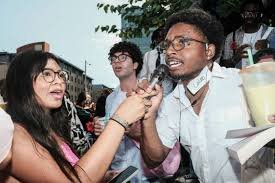
In recent years, a new social‑media–driven archetype has emerged: the “performative male.” On the surface, he appears soft, sensitive, progressive — but underneath, critics argue, there’s often a strategy at play. Whether one sees him as a refreshing alternative to stereotypical masculinity or as a shallow caricature chasing approval, the phenomenon reveals much about how gender, identity, and attraction are evolving in the digital age.
What is “Performative Male”?
The term “performative male” describes men — typically cisgender and heterosexual — who consciously adopt traits, aesthetic markers, and behaviours culturally associated with sensitivity, “feminine” interests, or progressive values. These might include enjoying iced matcha lattes, carrying tote bags with feminist literature, listening to indie or female artists, wearing vintage or thrifted clothes, posting introspective social‑media captions, and signalling emotional availability or “wokeness.”
Crucially, what defines the archetype isn’t necessarily the interests themselves, but rather the motivation: the performance. When the adoption of these traits is driven by a desire to appear alluring, sensitive, or “green‑flag” to women — rather than stemming from genuine affinity — the label “performative male” is more likely to apply.
In this sense, “performative male” is a modern update of long-standing concepts in gender theory. Scholars emphasise that gender itself can be “performed”: identity is not fixed, but enacted through behaviours and expressions.
The Iconic “Performative Male Package”
So what does performative masculinity look or feel like today? Some of the more common signifiers include:
- Fashion & aesthetic: thrifted or oversized clothing (baggy jeans, muted earth‑tones), tote bags, sometimes quirky accessories like novelty keychains.
- Lifestyle & habits: iced matcha lattes, vinyl records, soft drinks rather than “traditional” male fare, skincare, maybe even carrying items like tampons (symbolic as much as practical).
- Cultural interests: feminist or socially conscious literature, “soft” or alternative music, therapy‑speak, emotional vulnerability, introspective social media posts.
- Online presence: curated Instagram or TikTok content — moody photos, nostalgic lighting, “deep” captions, a persona that balances sensitivity and nonchalance.
While none of these alone defines a “performative male,” taken together — especially when employed with an underlying motive of romantic or social validation — they form the recognizable “performative male package.”
Why Has This Archetype Gained Prominence?
Reaction Against Traditional Masculinity
Over decades, dominant models of masculinity — the “strong, silent, provider” type — have been criticized for promoting emotional repression, dominance, and toxic behaviour. The performative male seems partly born from a desire to move away from those outdated norms: to embrace sensitivity, vulnerability, self‑care, and progressive values.
In some ways, the trend reflects a broader social shift: as discussions around mental health, equality, emotional intelligence, and identity become more mainstream, many young men are experimenting with new ways to express themselves.
The Role of Social Media and Dating Culture
The digital age — with social media platforms, dating apps, and ever‑present “public selves” — has amplified the pressure (and incentive) to curate one’s identity. For some men, the “performative male” persona becomes a form of aesthetic and messaging optimized for romantic or social success.
Moreover, some have argued that the performative male trend partly stems from insecurity. As societal expectations of what masculinity should be shift, some men feel uncertain and attempt to navigate a middle ground — but end up leaning on surface-level markers instead of deep authenticity. A therapist quoted in one article notes that sometimes, performance is linked to insecurity and confusion about what masculinity means today.
Criticisms and Controversies
Superficiality and Inauthenticity
A common critique is that the performative male often lacks sincere commitment behind the aesthetic. Critics call out the superficiality: liking a few “soft” things doesn’t necessarily translate into genuine allyship, emotional depth, or personal growth. In some eyes, it may even amount to manipulative signalling — as if drawing emotionally aware or progressive traits on like clothing to attract romantic attention.
Moreover, when the performance is unmasked — when the behaviour stops away from cameras or when the underlying beliefs don’t align with the image — relationships built on that “soft” façade can feel shallow or even dishonest. Some see the performative male as just another update on the “poser” archetype.
Reinforcing Gender Policing
Even though the performative male might seem to challenge narrow gender norms, the mocking and backlash against him shows that many societies still rigidly police masculinity. People often respond with scorn: “That’s not real masculinity,” or “He’s just trying too hard.” In doing so, they reinforce the idea that deviations from traditional masculinity are suspect.
This mockery serves as a form of social control — reminding men what “acceptable” masculinity looks like, and discouraging them from veering into ambiguity, experimentation, or vulnerability.
The Danger of Cynicism
On the opposite end of the critique spectrum, some argue that labeling every “soft” or emotionally expressive man as a “performative male” is unfair. It risks mocking men who are genuinely trying to unlearn toxic masculinity or explore healthier forms of self-expression. Dismissing all such efforts as “just aesthetic” can reinforce cynicism, making it harder to accept any variegated forms of masculinity at all.
In a context where social media exaggerates gestures and optics, authenticity becomes difficult to discern — and once sincerity is doubted, suspicion blankets anyone trying something outside the norm.
Cultural Spread — From Subcultures to Meme Form
What began as scattered criticism or ironic memes has rapidly grown into something more organized: “performative male contests,” widespread memes, commentary in mainstream media, and debates about identity, gender, and authenticity. In some cities, “performative male” competitions have even taken place — events where participants dress up the aesthetic and compete, partly as satire, partly as self-aware performance.
These contests and memes highlight just how strongly the archetype has captured the public imagination. The “performative male” has become both a mirror and a magnifying glass for anxieties around masculinity, attraction, and identity in a post‑#MeToo, digitally mediated world.
Is There Such a Thing as “Authentic Performative Male”?
One of the trickiest questions in all this is: can someone be a “performative male” and still be authentic at the same time?
Because gender and identity are performative in themselves — that is, we all enact parts of our identity in response to social context — some theorists argue that the idea of “authenticity” is flawed. For them, experimenting with different expressions of masculinity (or femininity) doesn’t necessarily mean one is dishonest — it might just be part of self‑discovery.
But others believe there’s a qualitative difference between “trying to be your real self” and “curating a persona for external validation.” If a person sincerely explores softness, vulnerability, feminism, or emotional growth, that’s different than using those traits as tools for attraction. The latter reflects a performance — one aimed at the gaze of others rather than self‑realization.
Of course, the line between the two can be blurry. Someone might start by experimenting (maybe posting aesthetic photos, trying new hobbies) and genuinely find themselves. Or they might begin with surface‑level mimicry that gradually becomes authentic over time. Human motivations and identities are rarely static.
Why the Debate Matters
The discourse around the “performative male” is more than a passing meme. It touches on deeper issues: the fluidity of gender, the pressure of social validation, the role of social media in shaping identity, and the difficulties of building genuine connections when presentation becomes a strategic tool.
- Masculinity is evolving. As traditional gender norms loosen, men are navigating new terrains. The “performative male” — for all its faults — signals a shift in what masculinity can look like: not just “tough” or “dominant,” but sensitive, introspective, emotionally aware.
- Authenticity becomes complicated. In a world dominated by images — Instagram posts, TikTok trends, online dating — it’s harder than ever to tell what’s real. The concept of “authenticity” itself becomes contested when everyone is constantly performing for an audience.
- Judgment remains harsh. Despite its growing visibility, performative masculinity is often met with mockery, scorn, or suspicion. That backlash reinforces old binaries: real men vs. “poser men,” emotional vs. unemotional, real vs. fake.
- Signals vs. substance. The trend raises important questions: is adopting “soft‑boy” traits enough if not accompanied by genuine beliefs, empathy, or action? Or is there value even in trying, even if imperfectly?
Navigating the Grey Areas — What We Should Watch Out For
If you find yourself reflecting on the idea of “performative male,” here are some things to keep in mind:
- Intention matters. Are the traits, habits, or aesthetics you adopt coming from genuine interest, or are they primarily aimed at external acceptance or attraction? Authenticity tends to emerge when actions align with internal values, not just surface desires.
- Substance over style. It’s easy to wear a tote bag or sip matcha — but transforming appearance isn’t enough. Empathy, respect, consistent behavior, and integrity matter far more than public aesthetics.
- Avoid assumptions. Just because someone identifies with softness, nontraditional masculinity, or vulnerability doesn’t mean it’s performative. It’s a mistake to treat every nontraditional man as inauthentic. People’s experiences and identities are more layered.
- Be critical — but don’t dismiss growth. Labeling someone “performative” can be a red flag, but it can also shut down attempts to unlearn toxic norms. Give room for growth, especially if someone is willing to reflect, listen, and change.
Final Thoughts
The “performative male” is more than just a meme or a joke — it reflects a real cultural shift. As gender norms loosen and the digital world amplifies both identity‑play and self‑branding, more men are experimenting with alternative forms of masculinity. Sometimes those experiments are shallow, strategic, and aimed at validation. Other times, they may be sincere attempts to find a more open, emotionally rich way of being.
Whether you see the performative male as a symptom of insecurity, a clever critique of toxic masculinity, or simply a social-media fad — the tension at its heart is real. It speaks to how we define gender, how we seek connection, and how we balance performance and authenticity in a world where both love and identity are increasingly mediated by screens.
In the end, maybe the point isn’t to toss the label out completely — but to ask, of ourselves and others: why we perform, and whether that performance is grounded in truth or in pursuit of applause.
