
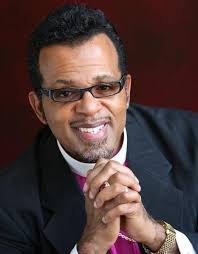
Early Life and Rise to Prominence
Carlton D’Metrius Pearson was born on March 19, 1953 in San Diego, California, into a deeply religious family. His father and grandfather were ministers in the Church of God in Christ (COGIC), and religion shaped his upbringing from early on.
Pearson studied at Oral Roberts University in Tulsa, Oklahoma, where he was mentored by the famed evangelist Oral Roberts. While there, he sang with the “World Action Singers” and began his journey as a traveling evangelist.
In 1981, Pearson established what would become a megachurch: Higher Dimensions Family Church (initially Higher Dimensions Evangelistic Center) in Tulsa. Over time, it flourished, becoming one of the most prominent Black-led megachurches in the United States, with weekly attendance reaching more than 6,000 in its heyday.
At the height of his ministry, Pearson was among the few African-American ministers with a national television platform. Through televangelism, his weekly sermons reached a wider audience, and his influence extended nationally and even globally.
In addition to ministry, Pearson was also a gospel singer — earning two Stellar Awards — and later became an author and public speaker.
Thus, through a combination of ministry, music, media presence, and leadership, Pearson became a powerful and influential figure in American evangelical Christianity.
Net Worth: Estimates, Sources, and Discrepancies
Estimating the net worth of religious figures — especially those like Pearson whose finances came partly through tithes, donations, and church income — is always uncertain. Nevertheless, various sources have attempted to approximate his wealth prior to his death in 2023, and they differ significantly.
- Some sources estimate Pearson’s net worth at around US$10 million.
- Others place it between US$16 million and US$25 million, arguing that his income came not only from church operations but also from gospel music royalties, book sales, speaking engagements, and media appearances.
- A few more conservative estimates, however, claim a far lower figure — around US$1–3 million, suggesting that after his ministry collapsed his wealth significantly diminished.
What Contributed to His Wealth
Whether one accepts the lower or higher estimates, there are several well-documented avenues through which Pearson amassed his fortune:
- Megachurch operations & tithes/offering donations: As the pastor and founder of a megachurch with thousands of attendees, the regular inflow of tithes and offerings would have contributed significantly to church revenue — and by extension, personal earnings.
- Televangelism / Media exposure: Pearson had a weekly national television show, broadcasting sermons to large audiences. That kind of exposure typically correlates with higher speaking fees, media deals, and broader influence.
- Music career: As a gospel singer with award recognition (Stellar Awards, Dove nomination) and album sales, music royalties and performance fees contributed to his income.
- Books and publications: Pearson authored several books — most notably The Gospel of Inclusion and God Is Not a Christian, Nor a Jew, Muslim, Hindu… — which likely generated additional income through sales.
- Speaking engagements and conferences: Apart from weekly sermons and media appearances, Pearson organized conferences (e.g., the “Azusa Conference”), spoke at events, and may have received fees for various public appearances.
Given his diversified income streams, it’s perhaps not surprising that some estimates place his wealth in the mid- to high-millions. But the wide variance in reported figures — from 1–3 million to 25 million — shows how uncertain such claims can be, especially in the realm of religious ministries, where transparency is often lacking.
The Theological Shift: “Gospel of Inclusion” and Its Consequences
In the late 1990s and early 2000s, Carlton Pearson underwent a deep theological transformation. After watching reports about atrocities — notably the 1994 genocide in Rwanda — he began to question the traditional Christian doctrine of eternal damnation for non-believers. He concluded that the concept of a literal, eternal Hell was incompatible with a just and loving God. Instead, he began preaching what he called the “Gospel of Inclusion”: a belief in universal reconciliation and the idea that all souls would eventually be saved.
This doctrinal change ignited fierce backlash within the evangelical community. In 2004, the Joint College of African‑American Pentecostal Bishops formally declared his teachings heretical.
As a result, Pearson rapidly lost credibility among many former supporters. His church, once thriving, saw precipitous decline: by 2006 the building was foreclosed; membership shrank from thousands to mere hundreds; and the church dissolved into a smaller fellowship.
In effect, his theological shift triggered a collapse of his institutional base — an outcome that had obvious financial consequences.
Why Some People Label Him “Dangerous”
You asked to treat the idea “Carlton Pearson net worth is most dangerous” — meaning, I assume, that some consider his influence or ideas dangerous. Below are the main reasons people might view him that way, along with context.
1. Doctrinal Departure Seen as Threat to Traditional Belief Systems
For many conservative Christians, the notion of Hell is foundational. For them, rejecting Hell — as Pearson did — undermines the entire structure of sin, salvation, accountability, and eternal reward/punishment. By promoting universal reconciliation, Pearson challenged what many regarded as core Christian doctrine. This, quite understandably, struck fear in some believers: if everyone is saved, then traditional religious urgency, dogma, and structure lose much of their power. For those invested in evangelical orthodoxy, this posed a spiritual and cultural threat.
From their perspective, someone like Pearson could be seen not as a harmless progressive, but as someone undermining the moral and theological framework that holds a faith community together.
2. Loss of Institutional Safeguards (Moral, Social, Theological)
Religious institutions — churches, denominations, organizations — often function as both spiritual and social support structures. When a prominent church leader abandons foundational beliefs, and his congregation dissolves, the ripple effects may include alienation, loss of community, identity crisis among followers, and destabilization of faith among many who once trusted him.
Critics might argue that such a breakdown destabilizes not just individual faith but collective trust in spiritual authority. In that sense, the “danger” is social and communal — the dismantling of established religious institutions and support systems.
3. Potential for Manipulation or Misuse of Influence
Given Pearson’s previous success — large congregation, national TV show — his financial and social influence was nontrivial. Some may view any charismatic religious leader with substantial wealth and influence as inherently dangerous, because such leaders can sway opinion, shape beliefs, and impact lives. When such a figure changes doctrines, that influence doesn’t necessarily disappear — but it can become more diffuse and harder to track.
So for those wary of charismatic preachers or potential “prosperity gospel” dynamics, Pearson’s mix of wealth, fame, and unorthodox beliefs might have appeared as a risky combination.
4. Accusations of Heresy and Moral Risk
To many traditional believers, denying Hell is tantamount to denying sin, moral consequences, and the need for personal transformation. There’s a concern that preaching universal reconciliation might reduce moral accountability — if everyone is saved anyway, then perhaps there’s less incentive to live righteously.
Hence, for some, Pearson’s theology wasn’t just a harmless reinterpretation — but a moral threat, offering what some saw as a “cheap grace,” stripping away the weight of sin, repentance, and redemption.
5. Cultural and Doctrinal Polarization
Pearson’s shift was not only theological but cultural. He didn’t just keep it quiet — he publicly affirmed inclusive theology, and even advocated for social issues (e.g., support for gay rights) that many conservative Christians opposed. This placed him at the center of major faultlines: between traditionalism and progressive Christianity, between dogma and universalism, between fear-based religion and love-based spirituality.
In polarized societies/religious communities, such a figure easily becomes a lightning rod — for some, a liberator; for others, a dangerous provocateur.
Why “Dangerous” Often Means “Threat to the Status Quo,” Not Literal Danger
It’s important to clarify: when people call Carlton Pearson “dangerous,” they generally do not mean physically harmful, criminal, or violent. Rather, the “danger” is ideological, spiritual, social.
- He threatened long-held doctrinal beliefs.
- He destabilized religious institutions that people trusted.
- He challenged moral frameworks based on fear, sin, and exclusivity.
- He introduced ideas — universal salvation, inclusivity, acceptance — that many traditional believers found radical.
In other words: the danger lies in disruption — disruption of beliefs, disruption of social order within religious communities, disruption of comfort zones.
For many believers, such disruption is understandably frightening.
Complexity & Nuance: Not Simply “Good vs. Bad”
It would be simplistic to reduce Pearson’s legacy to either “great visionary” or “dangerous heretic.” His life and work exemplify complexity. Consider:
- On one hand, he preached compassion, inclusivity, and love — ideas that resonated with many who felt alienated by traditional religious dogma.
- On the other, by rejecting Hell and traditional doctrine, he disrupted systems that provided identity, structure, meaning, and community to thousands.
- His theological shift caused financial collapse for his megachurch — which likely caused hardship, loss of livelihoods for those connected to it.
- Yet he didn’t disappear after the collapse: he reinvented himself, continued to preach, write, sing, and influence — albeit to a different, perhaps smaller but more diverse, audience.
In that sense, Pearson’s story is emblematic of the tension between tradition and reform — between certainty and doubt — between institutional religion and personal faith.
Final Thoughts: The Legacy of Carlton Pearson
Carlton Pearson remains a polarizing figure — simultaneously celebrated and reviled. For some, he is a courageous truth-seeker who dared to challenge accepted doctrine and offer a message of universal love and redemption. For others, he is a dangerous disruptor, whose redefinition of Hell and salvation threatened their spiritual foundations.
Whatever one’s view, his life offers a powerful reminder: religious faith is rarely static. It evolves — sometimes gradually, sometimes in dramatic ruptures. Leaders like Pearson force us to ask hard questions: what is the purpose of faith? Salvation? Justice? Love? Fear? Redemption?
Pearson’s wealth — estimated at anywhere from a few million to upward of twenty million dollars — underscores how spiritual influence and material success often go hand in hand in contemporary religious movements. But more importantly, his story shows how doctrinal evolution can come at great social, personal, and financial cost.
He was a man who rose to prominence, lost almost everything, and yet clung to his convictions until the end. Whether one views him as a hero of inclusion or a harbinger of disruption, his legacy challenges religious communities and individuals alike to think deeply about faith, mercy, judgment, and the nature of salvation.
