
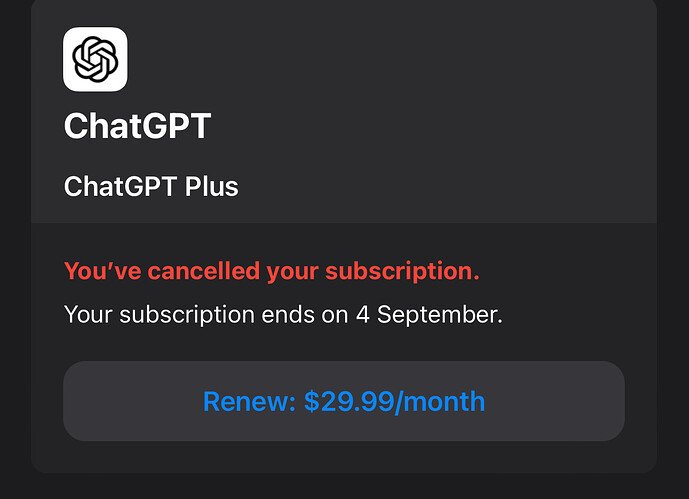
In today’s digital age, subscription services have become as common as electricity and internet access. We pay monthly or yearly for everything from music streaming to cloud storage, and increasingly, artificial intelligence tools like ChatGPT. Many people rely on ChatGPT’s advanced language abilities for productivity, creativity, business, and even emotional support. Yet, a simple action like canceling your ChatGPT subscription isn’t always straightforward — and it can carry serious consequences that many users don’t anticipate. In this article, we explore why the process of canceling your ChatGPT subscription might be more dangerous, complicated, and burdensome than it appears.
The False Sense of Simplicity
At first glance, canceling a subscription should be a simple click‑and‑done process. Most companies make this easy out of respect for customer autonomy. However, with ChatGPT, many users report difficulty accessing a working cancellation button, confusion in account menus, and uncertainty about whether the cancellation actually processed correctly.
Some users can’t find the option at all or discover that cancellation methods differ depending on where the subscription was purchased — web vs. mobile app vs. Google Play or App Store — which leads to frustration and unintentional continued billing. These interface complexities make what should be a basic consumer right feel like a puzzle.
Billing Confusion: Still Charged After Cancellation
One of the most alarming reported experiences is being charged even after cancellation. Multiple users have shared that they canceled their subscription in time, yet the service continued to bill their credit cards. In some cases, refunds were incomplete or not issued at all, leading to unexpected charges. This has left people feeling misled and financially vulnerable.
Imagine thinking you’ve stopped payments, only to check your bank statement weeks later and see the subscription still billing you. For people on tight budgets, this kind of error can lead to overdraft fees or blocked funds — a serious real‑world consequence from a digital subscription service.
Technical and Human Support Issues Amplify the Risk
Another dangerous aspect of canceling your ChatGPT subscription isn’t the cancellation itself — it’s the lack of reliable human support when things go wrong. Users frequently report receiving only generic automated responses, or no meaningful response at all, when they reach out for help. In cases where there have been billing errors or subscription cancellation failures, users are left to navigate the system on their own with little to no support.
The absence of accessible, responsive customer service can magnify financial and technical stress, especially for people who genuinely need confirmation that their subscription has been terminated correctly.
Downgrades in Access and Functionality
When you cancel a premium ChatGPT subscription, it doesn’t mean the service simply stops — it changes dramatically. After cancellation, your account is typically downgraded from paid tiers to the free plan, which means:
- Loss of access to advanced AI models (like GPT‑4 and higher‑end versions)
- Slower response times
- Lower usage limits
- Limited or no access to premium features like plugins, browsing, or advanced tools
Your experience with the AI can feel significantly reduced, which for many users feels like a deterioration of the service. While the core service still works, the quality and speed may be noticeably diminished, especially if you relied on higher‑end models for important tasks.
This downgrade isn’t inherently “dangerous” in the physical sense, but it can disrupt workflows, productivity, and ongoing projects if users aren’t prepared or informed ahead of time.
Downgrades in Access and Functionality
When you cancel a premium ChatGPT subscription, it doesn’t mean the service simply stops — it changes dramatically. After cancellation, your account is typically downgraded from paid tiers to the free plan, which means:
- Loss of access to advanced AI models (like GPT‑4 and higher‑end versions)
- Slower response times
- Lower usage limits
- Limited or no access to premium features like plugins, browsing, or advanced tools
Your experience with the AI can feel significantly reduced, which for many users feels like a deterioration of the service. While the core service still works, the quality and speed may be noticeably diminished, especially if you relied on higher‑end models for important tasks.
This downgrade isn’t inherently “dangerous” in the physical sense, but it can disrupt workflows, productivity, and ongoing projects if users aren’t prepared or informed ahead of time.
Unexpected Behavioral and Psychological Impacts
A perhaps less obvious but still real consequence of canceling your ChatGPT subscription involves the behavioral and emotional reliance people form with AI. Some users use ChatGPT not just as a tool, but as a companion for brainstorming, emotional support, or daily reminders. Suddenly removing access can leave users feeling unsettled or unsupported, especially if they depended on ChatGPT for regular tasks.
This doesn’t apply to everyone, but it highlights an aspect of technology that influences human psychology — a dependency that cancellation can abruptly break, leaving users without the cognitive support system they’d grown accustomed to.
Data Management and Loss Risks
Canceling your subscription doesn’t mean your account is deleted, and your history generally remains intact on the platform. However, once the paid features go away:
- You might lose access to interactive tools within saved conversations
- Some advanced data (like session replays or active plugin outputs) may not function the same
- Downloads and exports of your full conversation history can become necessary before the change takes effect
Users who don’t proactively export or back up their data before the subscription ends may face limited access to their own information afterward. For professionals relying on stored data for research, writing, or business, this can be a significant inconvenience and potential data loss risk.
Legal and Consumer Rights Concerns
For some users, the frustration with cancellation processes has even led to accusations of unfair business practices. People have argued that confusing interfaces, hidden cancellation pathways, and the difficulty of interacting with customer support violate basic consumer rights. Although these are individual claims and may not stand legally everywhere, they highlight how precarious and opaque subscription management can feel to users.
This ambiguity creates a broader concern around consumer protection in digital services — especially as AI becomes integrated into more aspects of life and work.
The Broader Impact on Trust and User Relationship
Finally, it’s worth considering the broader risk: the loss of trust between the service provider and the user. When canceling a subscription feels difficult, stressful, or risky, it damages the relationship. Users may feel that the company values revenue over transparency and fairness.
This isn’t just about a single subscription — it affects how people interact with and perceive AI companies more broadly. When users feel trapped, confused, or financially exposed, they may abandon AI entirely or switch to competitors, ultimately reshaping the market.
Conclusion: Cancellation Isn’t Just a Click — It’s a Process with Real Consequences
Canceling a ChatGPT subscription might seem like a simple administrative task — but the reality is far more complex and, in many ways, riskier than users anticipate. From billing confusion and support hurdles to loss of functionality, data management challenges, and even emotional impact, the decision to cancel carries consequences that go beyond pressing a button.
If you’re considering canceling your ChatGPT subscription, it’s essential to:
- Understand the downgrade in access and features
- Make sure the cancellation went through correctly
- Monitor your billing statements afterward
- Backup important data before the subscription ends
- Prepare for reduced AI capabilities and new limitations
Canceling a subscription might free you from recurring payments, but it doesn’t come without risk. Being informed and proactive helps ensure you don’t get more than you bargained for when you decide to let go of a powerful AI assistant.
