
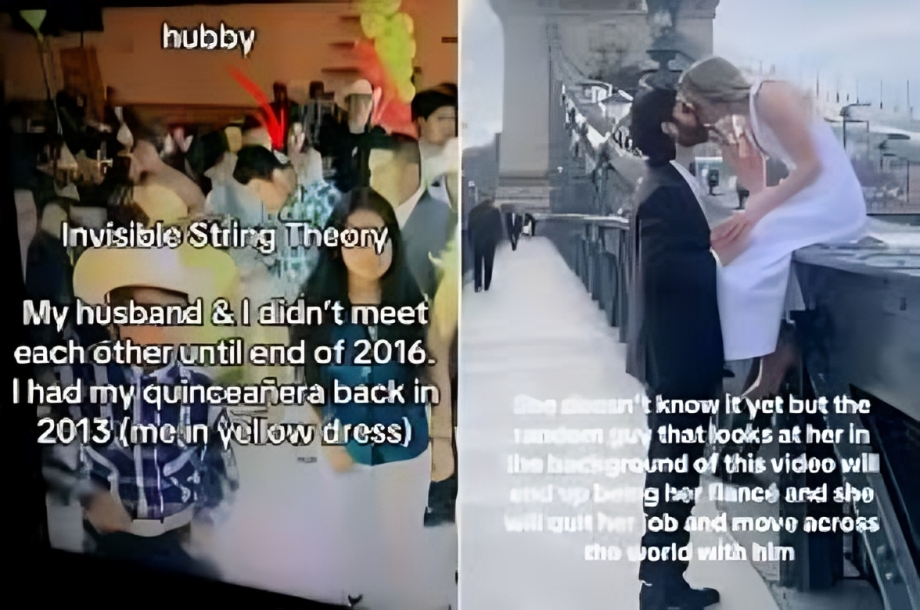
Have you ever met someone by pure coincidence and later realized that moment changed your entire life? Or experienced events that seemed random at first, but later felt meant to happen? These moments often lead people to believe in something deeper—an unseen force connecting people, places, and events. This idea is widely known today as Invisible String Theory.
Invisible String Theory has captured the imagination of millions around the world. From poetry and pop culture to psychology and philosophy, this concept suggests that we are all connected by invisible threads guiding us toward people and experiences destined for us. While it’s not a scientific theory in the traditional sense, its emotional and symbolic meaning has made it incredibly powerful.
In this article, we’ll explore Invisible String Theory, its origins, meaning, psychological impact, real-life examples, and why it resonates so deeply in modern life.
What Is Invisible String Theory?
Invisible String Theory is the belief that people who are meant to connect—whether as lovers, friends, or soulmates—are bound together by invisible strings that cannot be broken, regardless of time, distance, or circumstances.
The theory suggests that no matter how far apart two people are, or how many obstacles stand in the way, they will eventually find their way to each other. These invisible strings may stretch, tangle, or twist, but they never snap.
At its core, Invisible String Theory represents:
- Fate and destiny
- Emotional connection
- Synchronicity
- Meaningful coincidences
Unlike scientific string theory, this idea belongs more to the realm of emotional philosophy and human experience.
Origins of Invisible String Theory
The concept of invisible strings is not new. It has appeared in different cultures and philosophies for centuries.
Ancient Roots
In East Asian folklore, particularly Chinese and Japanese mythology, there is the idea of the “Red Thread of Fate.” This legend states that the gods tie an invisible red thread around the ankles or fingers of people destined to meet.
No matter how much time passes or how far apart they are, those tied by the thread will eventually meet.
Modern Popularity
The term Invisible String Theory gained widespread attention through:
- Literature and poetry
- Social media storytelling
- Songs and pop culture references
- Emotional narratives about love and destiny
It became especially popular among younger generations as a way to explain deep emotional connections in an unpredictable world.
Invisible String Theory vs. Scientific String Theory
Although they share a name, Invisible String Theory and Scientific String Theory are completely different concepts.
| Invisible String Theory | Scientific String Theory |
|---|---|
| Emotional & philosophical | Physics-based theory |
| Symbolic connections | Mathematical models |
| Focuses on relationships | Focuses on particles |
| Rooted in belief | Rooted in science |
Invisible String Theory is metaphorical—it speaks to the human heart, not laboratory experiments.
Why Invisible String Theory Feels So Real
Many people strongly resonate with Invisible String Theory because it explains emotional experiences that logic alone cannot.
1. Humans Seek Meaning
Our brains are wired to find patterns. When something meaningful happens unexpectedly, Invisible String Theory provides comfort and understanding.
2. It Validates Emotional Bonds
Deep connections—especially instant ones—often feel unexplainable. This theory gives those feelings a name.
3. It Offers Hope
Believing in invisible strings reassures people that:
- Missed connections aren’t final
- Lost love may return
- Right people arrive at the right time
Invisible String Theory in Love and Relationships
Love is where Invisible String Theory shines the brightest.
Soulmates and Romantic Destiny
Many couples describe meeting their partner as “fate.” They may have:
- Crossed paths multiple times unknowingly
- Met after years of emotional growth
- Found each other during difficult life stages
Invisible String Theory suggests they were always connected—just waiting for the right moment.
Long-Distance Relationships
This theory is especially comforting for people separated by geography. It reinforces the belief that distance cannot break what is truly meant to be.
Invisible String Theory in Friendships
Not all invisible strings are romantic.
Some friendships:
- Reappear after years of silence
- Form instantly with deep understanding
- Survive life changes and time
Invisible String Theory explains why certain friendships feel timeless, even after long gaps.
Career, Purpose, and Life Paths
Invisible String Theory doesn’t apply only to people—it can also explain life direction.
You might:
- Accidentally find a career you love
- Meet a mentor by chance
- End up living somewhere you never planned
These moments often feel “meant to be.” According to Invisible String Theory, unseen forces guide us toward experiences aligned with our purpose.
Psychological Perspective on Invisible String Theory
From a psychological standpoint, Invisible String Theory aligns with several concepts:
Synchronicity
Carl Jung described synchronicity as meaningful coincidences that feel connected without a direct cause.
Attachment and Emotional Memory
Our brains form strong emotional links with people who leave an impact. Over time, we interpret these connections as destiny.
Confirmation Bias
Once we believe in invisible strings, we notice evidence that supports the belief—making it feel even more real.
Invisible String Theory in Pop Culture
Invisible String Theory has become a cultural phenomenon.
Music
Many songs reference invisible connections, fate, and destiny—especially in love ballads.
Movies and TV
Romantic films often revolve around:
- Missed connections
- Second chances
- People finding each other against all odds
These stories reinforce the emotional truth behind Invisible String Theory.
Real-Life Examples of Invisible String Theory
Here are common real-world experiences people associate with this idea:
- Two strangers meet, later discover they lived in the same city for years
- Friends reconnect decades later and pick up instantly
- Couples meet after life-altering events that shaped them for each other
- People discover their passion through unexpected encounters
While these may be coincidences, they feel meaningful—fueling belief in invisible strings.
Criticism of Invisible String Theory
Not everyone agrees with Invisible String Theory.
Common Criticisms:
- It romanticizes coincidence
- It may encourage passivity
- It lacks scientific evidence
However, supporters argue that its value lies in emotional truth, not factual proof.
Can Invisible String Theory Be Harmful?
When misunderstood, it can be.
Potential risks include:
- Staying in unhealthy relationships believing they’re “meant to be”
- Avoiding personal responsibility
- Waiting for destiny instead of taking action
A healthy approach balances belief with self-awareness and choice.
How to Embrace Invisible String Theory in a Healthy Way
You can appreciate Invisible String Theory without losing control over your life.
Healthy Mindset Tips:
- See it as symbolic, not absolute
- Take action while staying open to possibilities
- Let it inspire hope, not dependency
- Use it to reflect, not to avoid decisions
Why Invisible String Theory Matters Today
In a fast-paced, digital world, people crave:
- Meaning
- Connection
- Emotional reassurance
Invisible String Theory offers a comforting narrative—that nothing truly meaningful is accidental.
It reminds us that even in chaos, there may be purpose.
Final Thoughts on Invisible String Theory
Invisible String Theory may not be proven by science, but it is proven by experience, emotion, and human connection. It helps explain why certain people enter our lives, why some moments feel destined, and why connections can survive time and distance.
Whether you see it as fate, coincidence, or emotional symbolism, Invisible String Theory continues to resonate because it speaks to a universal truth:
We are all connected in ways we don’t always understand.
And sometimes, the most powerful forces are the ones we cannot see.
