
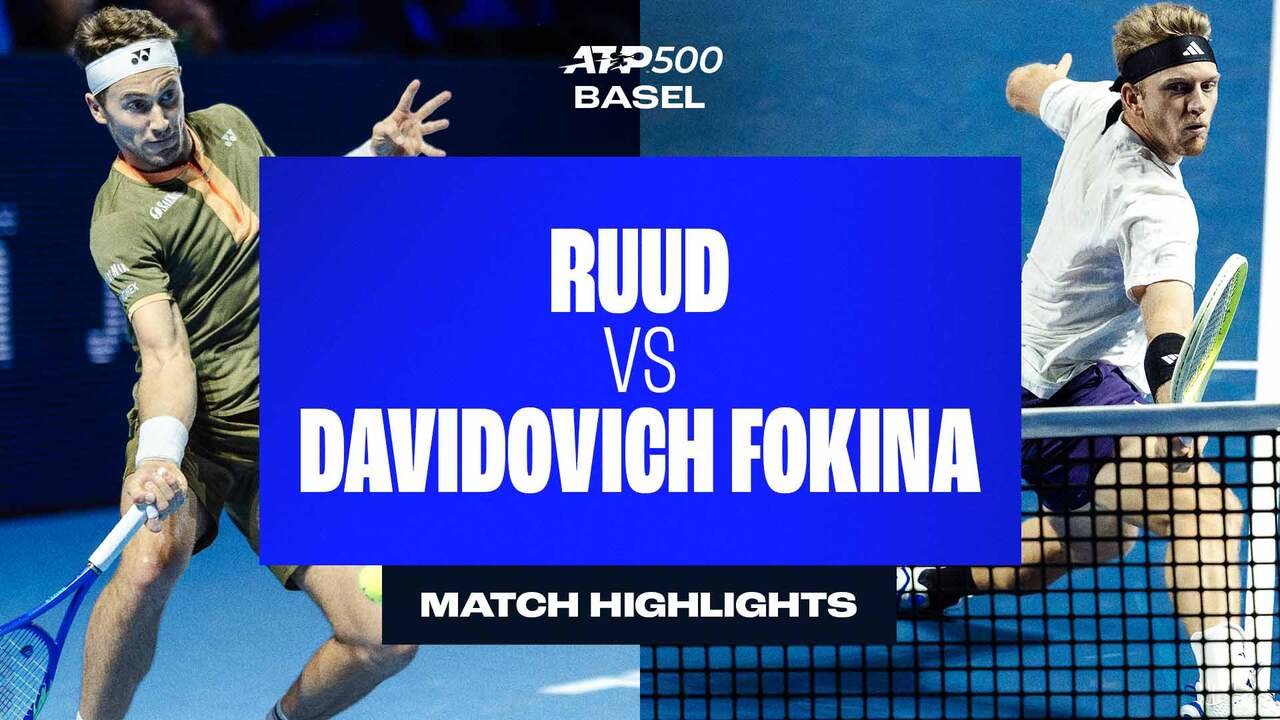
In the high-stakes world of ATP tennis, few matchups evoke as much intrigue, tension, and unpredictable danger as Casper Ruud vs Alejandro Davidovich Fokina. This is not merely a clash of two talented athletes; it is a collision of contrasting styles, temperaments, and strategic identities that makes for some of the most thrilling and perilous tennis on the professional tour. Fans, commentators, and pundits alike have often dubbed this pairing one of the most unpredictable and dangerous matchups due to its history of close battles, fluctuating momentum swings, and sheer emotional intensity on court.
Two Very Different Journeys to the Top
Casper Ruud and Alejandro Davidovich Fokina could not have followed more divergent paths through tennis development, yet both have carved out significant places in the ATP rankings and earned respect from peers around the globe.
Casper Ruud: The Consummate Professional
Casper Ruud is the epitome of discipline and consistency. A Norwegian with a strong clay-court pedigree, he has reached multiple Grand Slam finals and has been ranked as high as world No. 2 during his career. His game is built on precision baseline hitting, excellent movement, and remarkable mental resilience. Ruud’s groundstrokes—particularly his heavy topspin forehand—are weapons that force opponents into uncomfortable defensive positions. His strategic play has allowed him to grind down even the most powerful hitters through smart point construction and superior stamina.
Alejandro Davidovich Fokina: The Wild Card
In contrast, Alejandro Davidovich Fokina embodies tennis unpredictability. A Spaniard who thrives on clay but brings drama to every surface, Fokina is known for his flair, athleticism, and flair for the dramatic. His aggressive shotmaking, fluid court coverage, and willingness to go for high-risk winners make him one of the most exciting players to watch. Fokina’s style can surge like a tidal wave, overwhelming opponents quickly, but it can also sputter if his aggressive mindset falters. This volatile mix makes him dangerous to face because, on any given day, he can peak at an incredibly high level or unravel under pressure.
Head-to-Head: Narrow Margins and Brutal Battles
What makes the Ruud vs Fokina matchup particularly dangerous is how razor-thin the margins are between victory and defeat. When these two meet, neither one holds a dominant edge, and the contests frequently unfold as gritty, nerve-racking affairs that test every facet of a player’s game.
Their career head-to-head record stands in favor of Ruud by a slim margin, with Ruud holding a 3-2 lead overall. However, those numbers belie just how tense and evenly matched their encounters have been. Many of their matches have extended deep into deciding sets, with both players trading breaks and momentum shifts like heavyweight boxers in the final rounds.
One of the most telling aspects of their head-to-head is how the dynamics change depending on surface and match conditions. Ruud’s consistency and strategic placement can wear down opponents on slower clay, whereas Fokina’s shotmaking and unpredictability can flourish on faster or more variable surfaces. This contrast creates a scenario where every match becomes a chess battle with shifting psychological pressure.
Matches Defined by Grit and Drama
Their most memorable encounters have often been grueling five-set epics where neither player could be easily shaken off the court. At one of the biggest tournaments on the calendar, these two grinders produced a classic battle that showcased exactly why analysts consider this rivalry so dangerous.
In one hard-fought match, Ruud edged out Fokina in a deciding set that featured drama, tense momentum swings, and moments that tested both players’ nerves. The contest was marked by long rallies, tactical depth, and high pressure on every serve. Ruud’s ability to maintain his composure in critical points allowed him to eke out the victory, but not without significant resistance from Fokina, who was equally determined to force errors and seize control of the match before ultimately falling just short.
Beyond individual matches, the defining characteristic of this rivalry is the psychological ebb and flow. Fokina’s flair and aggression often push Ruud out of his comfort zone, forcing the Norwegian to dig deeper and rely on his mental toughness. Conversely, Ruud’s methodical style and ability to return balls relentlessly can frustrate Fokina, leading to unforced errors at pivotal moments.
Stylistic Contrasts Fuel the Danger
One of the key reasons this matchup is labeled “dangerous” is that Ruud and Fokina represent fundamentally different tennis philosophies—each capable of exploiting weaknesses in the other’s game, depending on form and conditions.
Ruud’s Steadfast Consistency
Ruud is not the most explosive athlete, but his steadiness and tactical maturity often neutralize big hitters. He will chase down balls, extend rallies, and wait for the precise moment to strike. This patient style works incredibly well against players who rely on rhythm and timing, and it can expose foes who lose confidence when pushed deep into matches.
Fokina’s Aggressive Dynamism
Fokina, on the other hand, is at his best when he is dictating play. He will step inside the baseline to take balls early, use angles to open up the court, and unleash a variety of spins and winners. His athleticism allows him to reach shots that seem unreachable, turning defense instantly into offense. For Ruud, containing this kind of aggression requires pinpoint depth and consistency—an exacting challenge in high-pressure moments.
The contrast between steadiness and aggression means that matches between these two can swing wildly depending on which player gains the early advantage. A slow start by either can put them immediately on the back foot, while a strong opening set can create a psychological edge that defines the rest of the contest.
Mental Warfare: The Invisible Battle
Beyond the physical and tactical facets of their rivalry, the mental dimension plays a huge role in why Ruud vs Fokina is so dangerous. Both players are mental warriors in their own way, but they draw on very different reservoirs of psychological strength.
Ruud’s mental game is rooted in patience and persistence. He rarely rushes decisions and instead focuses on constructing points intelligently. When under stress, he tends to slow things down and rely on his game plan, waiting for errors from his opponent. This controlled mindset serves him well in pressure situations, particularly in long matches where physical stamina intersects with mental grit.
Fokina’s psychological makeup is more mercurial. He wears his emotions on his sleeve and feeds off momentum. When he’s confident and rolling, he can elevate his level to thundering heights. However, when doubts creep in, his aggressive approach can become erratic, leading to bursts of unforced errors that quickly flip the script. This volatility adds another layer of unpredictable danger to matches against someone like Ruud, who thrives on consistency and mental discipline.
The Fan and Player Perspectives
For tennis fans, the Ruud vs Fokina matchup is a treat. These matches are rarely straightforward, and often deliver long rallies, fluctuating fortunes, and dramatic shifts in control that keep spectators on the edge of their seats. Many fans relish the tactical depth and emotional swings, while others appreciate the contrast in personalities and playing styles that make each encounter feel fresh and unpredictable.
From the players’ points of view, such matchups are both a challenge and an opportunity. Ruud views every meeting with Fokina as a chance to test his mental resilience against one of the tour’s more dynamic competitors. Fokina, for his part, sees Ruud as a benchmark—a player with formidable consistency and strategic depth, whose level can only be matched with fearlessness and peak focus.
Why This Rivalry Is One to Watch
In an era where tennis is often dominated by a handful of elite names, the Ruud vs Fokina matchup stands out as uniquely combustible. It is not about rankings or titles alone—although both players have impressive credentials—but about how they push and pull each other into unfamiliar emotional and tactical territory.
Their clashes are dangerous because of:
- Unpredictability: Neither player can easily dominate the other, meaning momentum can shift at any moment.
- Stylistic contrast: The contrast between Ruud’s controlled consistency and Fokina’s explosive aggression creates tactical complexity.
- Physical and mental endurance: Matches between them often test stamina, patience, and resolve across long rallies and deciding sets.
- Psychological depth: Both players bring distinct emotional energy, which plays out dramatically under pressure.
Conclusion: A Rivalry Forged in Fire
The Ruud vs Fokina rivalry is more than just a series of matches—it is an ongoing narrative in men’s tennis that embodies the sport’s physical, tactical, and psychological challenges. Dangerous, thrilling, and unpredictable, this matchup captures the essence of competition at the highest level. Whether it’s on clay, hard courts, or grass, when these two step onto the same court, tennis fans can expect a duel that demands attention, respect, and admiration.
In a sport where so many details can influence a match, few rivalries combine contrast, drama, and sheer competitive fire as compellingly as Casper Ruud vs Alejandro Davidovich Fokina. This is why, for players and fans alike, their encounters remain some of the most dangerous and captivating spectacles in modern tennis.
