
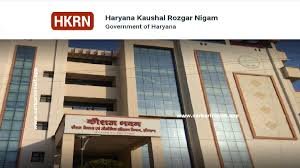
The acronym HKRN stands for Haryana Kaushal Rozgar Nigam — a state‑level institution established by the government of Haryana to reshape how contractual and outsourced government employment is managed. Since its inception, HKRN has emerged as a central mechanism for providing transparency, fairness, and streamlined access to jobs for many citizens of Haryana. Below, we explore what HKRN is, why it was created, how it works, and what implications it carries for job‑seekers and the broader public sector in Haryana.
What is HKRN?
HKRN is a government‑owned entity established under the Companies Act, 2013. It was formally incorporated on 13 October 2021 by the Haryana government.
The goal of HKRN is to act as the centralized body responsible for recruiting and deploying contractual, outsourced, or “DC‑rate” manpower across various government departments, boards, corporations, statutory bodies, and state universities.
By centralizing the process, HKRN replaces the earlier fragmented system where each department individually handled its contractual hiring — a system often criticized for inefficiency, lack of transparency, delays, and occasional corruption.
In essence, HKRN serves as a bridge between job‑seekers (particularly contractual/skilled workers) and government‑controlled employers, offering a single portal and standardized procedure for temporary staffing needs.
Why Was HKRN Created?
The establishment of HKRN was motivated by several interlinked problems and ambitions:
- Fragmented and irregular hiring practices: Before HKRN, each government department managed its own contractual staffing, which often resulted in inconsistent processes, delays, misuse of funds, and lack of uniformity across departments.
- Lack of transparency and accountability: The prior system sometimes attracted allegations of favoritism and mis‑management. By centralizing hiring, HKRN aims to enforce fairness, transparency, and prevent corruption.
- Need for equitable opportunities: HKRN aims to ensure that disadvantaged or socio-economically weaker sections get access to jobs, respecting reservation policies and promoting social inclusion.
- Timely payment and proper benefits: Apart from recruitment, HKRN also aims to ensure that contractual workers receive their wages on time and with appropriate benefits — a concern often raised in outsourcing scenarios.
In short: HKRN was established to bring order, fairness, uniformity, and dignity to contractual recruitment in Haryana.
How HKRN Works: The Process & Scope
The functioning of HKRN involves several steps and covers a wide range of governmental bodies. Here’s a breakdown:
- Centralized demand intake: When a government department, board, corporation, statutory body, or state‑run university in Haryana needs contractual manpower, they send their staffing requirements to HKRN.
- Vacancy publication and applications: HKRN publishes job notifications on its portal. Eligible candidates (residents of Haryana) can apply online.
- Selection procedures: Depending on the job, selection may involve written tests, interviews, or skill assessments to ensure that suitable candidates are chosen.
- Deployment and contract-based employment: Selected individuals are offered contract-based employment (not permanent). HKRN handles deployment to the requested department or body.
- Focus on transparency and welfare: HKRN aims to ensure timely wages, benefits (as applicable), equitable representation, and adherence to state reservation policies.
Who can apply / who gets covered:
- Residents of Haryana (domicile certificate required).
- Candidates across different educational and skill levels, depending on position (Group B, C, D — or equivalent contractual categories).
- Individuals holding required certificates (education, domicile, category/reservation certificate, skill or experience certificates when applicable).
What HKRN Covers — Scope and Reach
HKRN’s scope isn’t limited to a few departments. Rather, it serves as the sole authorized agency for contractual manpower recruitment across a broad swath of state‑controlled entities:
- Government departments (health, urban bodies, statutory services, etc.).
- Statutory bodies, state boards, and corporations under Haryana government.
- State universities and educational institutions controlled by the state.
In certain cases, HKRN also aims to liaise with private sector and even overseas employers — offering placements beyond Haryana’s borders for suitably registered and skilled candidates, thereby broadening opportunities.
Thus, HKRN is not just a temporary staffing agency — it is a broad‑based manpower management system with capacities for domestic and even international employment facilitation.
Early Impact and Success Stories
Since being launched:
- HKRN has already provided employment offer letters to hundreds of candidates. For example, in one instance 746 candidates received job offer letters under HKRN for various posts.
- The centralized and transparent mechanism has helped reduce the previous irregularities and favoritism associated with contract hiring. Officials have highlighted that through HKRN, recruitment is being done in a “transparent and robust manner.”
- The adoption of IT‑based portal and formal processes has modernized recruitment, making it easier for applicants to apply online and for departments to manage staffing needs in a systematic way.
Overall, the early results suggest that HKRN is making a real difference — especially for youths, the underprivileged, and those seeking contractual government employment.
Challenges, Criticisms, and What Remains to Be Seen
While HKRN presents a promising model, there remain areas of concern — and open questions about its long‑term effectiveness. Some of these include:
- Contractual (not permanent) nature of jobs: HKRN primarily provides contractual or ad‑hoc employment. For many workers, the lack of permanent job security remains a downside compared with direct government employment.
- Reliance on varying demand from departments: Since HKRN depends on individual departments’ manpower needs, job availability may fluctuate — leading to uncertainty for prospective employees.
- Challenges of skill matching and quality control: For sectors requiring specialized skills, ensuring that selected candidates meet standards is critical. While HKRN does attempt screenings, the volume and diversity of posts mean consistent quality control is demanding.
- Dependence on state-run institutions: The effectiveness of HKRN is tied to the genuine willingness of state departments to use the portal. If departments resort to external contractors or bypass HKRN, the system’s goals may be undermined.
- Long-term career growth and benefits: Contract jobs may lack benefits such as job stability, pension, or long-term career progression — factors that many job‑seekers consider important.
Thus, while HKRN’s model is more centralized and fair than prior arrangements, its long-term impact will depend on consistent implementation, oversight, and possibly evolution towards more stable employment frameworks.
Broader Significance: What HKRN Means for Governance & Youth Employment
The creation and functioning of HKRN reflect larger trends and aspirations within state governance and employment policy. Here are some of those broader implications:
- Institutionalizing fairness and transparency: By channeling contractual hiring through a single authorized agency, HKRN reduces ad‑hocism, favoritism, and scope for corruption. This contributes to improved governance, trust, and accountability in public service employment.
- Empowering marginalized communities: The emphasis on reservation policies, equitable access, and upliftment of socio‑economically weaker candidates helps foster inclusivity in government employment, a step toward social justice.
- Tackling youth unemployment: For many young people — especially those without advanced degrees — HKRN offers a realistic route into government‑associated jobs. This may help reduce unemployment, underemployment, and associated social stress.
- Streamlining public personnel management: The model allows departments to request manpower as needed and get qualified people deployed efficiently — making public institutions more responsive and flexible.
- Potential as a model for other states: If HKRN’s model proves successful, it could inspire similar initiatives in other states — especially in handling contractual manpower fairly and transparently — thereby influencing national-level manpower policies.
The Road Ahead: Key Things to Watch
As HKRN continues to evolve, several aspects will determine whether it becomes a long-term success story or remains a partial solution. Important factors to observe:
- Sustainability of contractual employment: Whether HKRN can gradually offer more stable, long-term career paths, or at least ensure periodic renewal and welfare benefits for contractual staff.
- Quality of deployment and skill matching: Ensuring that workers deployed through HKRN meet required standards, especially in specialized sectors like health, technical services, education, etc.
- Transparency and oversight: Continued transparency in recruitment, deployment, wage disbursement, grievance redressal, and correct implementation of reservation/compassionate appointment policies.
- Scale and reach expansion: Potential expansion to cover more sectors, private and overseas placement (if that part of HKRN’s mandate is fully implemented), and thus broader employment opportunities.
- Public perception and trust: For any public‑facing recruitment institution, trust among citizens and applicants is crucial. Continued fairness, equal opportunity, and clarity will shape HKRN’s reputation.
Conclusion
Haryana Kaushal Rozgar Nigam (HKRN) marks a significant step forward in how government-associated contractual staffing is handled in Haryana. By centralizing recruitment processes, standardizing procedures, and aiming for transparency and equity, HKRN offers a modern, fair, and accessible conduit for job‑seekers — especially youths and underprivileged candidates — to take up contractual employment in public institutions.
While challenges remain — particularly around job stability, long‑term benefits, and consistent implementation — the early successes and systemic reforms introduced by HKRN are promising. If managed well, HKRN could stand as a model for other states, and more importantly, make a tangible difference in the lives of many aspiring workers, contributing to inclusive growth, better governance, and a more accountable public employment system.
