
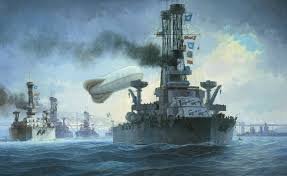
War has always driven innovation — and sometimes obsession. Throughout naval history, nations have attempted to build a vessel so powerful, so heavily armed and armored, that no enemy could match it. These floating behemoths were meant to dominate the seas, but many ended up revealing a paradox: the most dangerous ship is as much a symbol of vulnerability and hubris as it is of strength.
In this article, we examine some of history’s most formidable warships — not just for their destructive potential, but for what their design and fate teach us about danger, fragility, and the shifting nature of naval warfare.
What makes a ship “dangerous”?
When naval engineers and strategists evaluate a warship’s threat level, they consider several factors:
- Firepower — how heavy and powerful the ship’s guns are.
- Armor and protection — how well it can withstand enemy fire.
- Size and displacement — larger hulls allow more guns, thicker armor, and longer endurance.
- Speed and mobility — firing heavy guns is one thing; surviving hits and maneuvering is another.
- Tactical context and support — even the mightiest ship needs support from other vessels, air cover, or good strategy.
Paradoxically, pushing too far on firepower and size often came at the cost of flexibility, detection risk, and dependence on favorable conditions — making such ships both “most dangerous” and highly vulnerable when warfare changed.
- When completed in late 1941, Yamato was the largest battleship ever built. Fully loaded, she displaced nearly 72,000 tons.
- Her main battery: nine 460 mm (18.1-inch) Type 94 guns, the largest ever mounted on a warship.
- The shells were massive — powerful enough to sink enemy ships at ranges rivaling or exceeding many contemporary weapons systems.
- Heavy armor complemented her firepower, making her seemingly invincible in ship-to-ship combat.
Dangerous potential: At the time, Yamato represented concentrated destructive power unmatched by any other ship. In a head-on clash with older battleships, she could have decimated them with ease.
The catch: By the time Yamato entered service, naval warfare was rapidly evolving. Aircraft, submarines, and carrier-based tactics made even such a mighty battleship vulnerable. Indeed, her final mission — a one-way sortie near the end of the war — ended in destruction.
Yamato stands as a monument to naval ambition and a symbol of the limits of sheer size and firepower.
- Laid down in 1936 at the famed shipyard of Blohm & Voss in Hamburg, Bismarck was the flagship of Germany’s re-armament — a bold bid to challenge Allied naval dominance.
- She measured roughly 821 feet (≈ 250 m) in length with a beam of 118 feet, displacing over 50,900 tons fully loaded.
- Her armament: eight 15-inch (38 cm) guns in four twin turrets, supplemented by a large complement of secondary and anti-aircraft guns — a warship bristling with firepower.
- At launch, many contemporaries — including some Allied leaders — considered Bismarck almost “unsinkable.”
Dangerous potential: The Bismarck could — and did — strike fear into Allied navies. She sank one of Britain’s pride ships, inflicting a blow that reverberated across the Atlantic.
The catch: Her might forced the Allies to commit massive resources — warships, aircraft, intelligence — solely to neutralize her. Bismarck’s demise showed that even a powerful battleship could not survive in an era of air power, radar, and coordinated submarine/air/ship attacks. Her sinking marked a turning point: battleship-dominated naval warfare was on the decline.
Bismarck’s legacy is dual: she was both a terror to her foes and a demonstration of how rapidly naval warfare was changing.
The Shipbuilder’s Paradox: Strength vs. Vulnerability
The stories of Yamato and Bismarck — and other such “super-ships” — highlight a fundamental tension in naval architecture and strategy.
🚢 Obsession with Size & Firepower
- Nations often believed that bigger is better. More guns, more armor, more tonnage = dominance.
- The logic: a single decisive battle between fleets — and the side with the superior battleships wins. This was heavily influenced by 19th-century and early 20th-century naval thought.
⚠️ But war evolves, and so do threats
- As aviation, submarines, and air-to-ship weapons matured — massive battleships became easier to detect, target, and destroy.
- Big ships had limited maneuverability, required huge resources to sustain, and were often slower to adapt than smaller, more flexible vessels.
- The very investments that made them powerful — heavy armor, large guns — became liabilities when faced with modern threats like torpedoes and dive bombers.
🧭 Cost vs. Utility: Diminishing Returns
- Building and maintaining a super-battleship drained vast national resources.
- When their strategic relevance diminished, these investments often yielded little return. For instance, many huge battleships saw little action, or were relegated to support roles.
- In some cases, their existence forced opponents to adopt new tactics: air power, submarines, and carriers — effectively making the battleship era obsolete.
Lessons from History: Why “Most Dangerous” Doesn’t Always Mean “Most Effective”
1. Flexibility beats brute strength
A smaller, more mobile fleet — combining destroyers, submarines, aircraft carriers — often proved far more effective than a small number of massive battleships.
2. Surprise and technology shift the balance
Aircraft, radar, submarines — these changed what “dangerous” meant at sea. A battleship built for gunnery duels was suddenly vulnerable to threats beyond its design scope.
3. Cost-risk tradeoffs
The enormous cost in materials, manpower, and strategic focus for such behemoths reduced a navy’s ability to invest in diversified assets and innovation.
4. Symbolism vs. reality
Ships like Yamato and Bismarck were as much propaganda tools — statements of national pride — as instruments of war. Their political and psychological value often overshadowed practical considerations.
Conclusion: The Shipbuilder’s Warning
The history of naval warfare reveals a powerful truth: building the “most dangerous” ship is often less important than building the right kinds of ships for the right kinds of wars.
The giants like Yamato and Bismarck remind us: size, firepower, and armor can give you a terrifying weapon — but not always the winning strategy. As warfare evolved, navies that adapted to new threats — mobility, stealth, air superiority, flexibility — gained the advantage.
For shipbuilders, strategists, and historians alike, the lesson is clear. Aspiring to build the biggest or most heavily armed vessel can satisfy ambition — but it can also blind one to the changing nature of war, leaving even a mighty ship dangerously obsolete.
In the end, true power at sea hasn’t always come from building the biggest warship. Often, it’s come from learning when not to build one, and instead investing in adaptability, foresight, and diverse capabilities.
